Come Visit Me at http://www.christinewhelan.com/blog
This blog as moved!
Come visit me at
http://www.christinewhelan.com/blog
Looking forward to seeing you soon!
Christine
Las Vegas Quickie? No Problem…
 In yet another hilarious-but-informative episode of The Princess, The Priest & The War for the Perfect Wedding, Fr. Eric and I answer a question from a woman whose fiancé has just told her–weeks before the wedding–that he’d previously been married in a Vegas Chapel of Love. What does this mean for their upcoming nuptials… and how many bad gambling puns can I make in four minutes? Check it out here.
In the news
It’s Wednesday, spring is nearly here… and love is in the air!
• On Feb. 22, a Skype interview I did with Currents, a NY-based Catholic TV station, aired and got great feedback.
• As the marriage age in India rises, many SWANS® there are taking heart in my good-news statistics and targeted advice.
• It’s the 5th anniversary of my Pure Sex, Pure Love column on BustedHalo.com — and wow, the kind words and good wishes from readers just blew me away.
• Also, check out my latest column full of love and relationship advice from the new book 59 Seconds: Think a Little, Change a Lot.
Top Valentine’s Tips
After doing several interviews with TV and print media leading up to Valentine’s Day, I thought I’d post a few tips I’ve been talking about:
Top Valentine’s Tips for Singles
• Break out of your pity-party mode by planning a Bring-a-Friend party for next month: Pick a date and a venue, then invite 10-20 friends and tell them to each bring one single friend that you don’t know. Just think of all the new people you’ll meet!
• Look through your contacts and email at least three friends who you haven’t been in touch with in a while — guys or girls. Getting into a new social group can mean introductions to your perfect match
• Consider an online dating site — many are offering free trials over this holiday weekend
Top Valentine’s Tips for Those in a Relationship
• Showing your love doesn’t need to cost a fortune: Consider a picnic in your living room, a nearby day-hike or snuggling up and watching your favorite romantic comedy.
• Love letters never get old: Write at least five reasons why you think your special someone is the tops. Or slip a little love-note in your spouse’s wallet so they’ll find it later in the day and be surprised.
• Figure out each other’s “language of love”: We all give and receive love differently — some show love verbally, others through hugs, others through actions. Which way do you show love–and which way does your significant-other receive it?
Here’s to a great day of love, chocolate and cheesy movies!
Can Love Make You Rich?
I’m quoted — and my mate-preference research is cited — in a piece up now on CBS MoneyWatch.
The Beatles told us that all you need is love. And maybe that was true in 1967. But these days, love alone doesn’t pay the mortgage. So, as we approach Valentine’s Day, it’s a good time to consider the other side of the coin: Can love bring you money?
Check it out and learn how red hearts can make you see more green this Valentine’s Day… it’s part of a larger package on love and money, with other interesting articles, including
•10 Ways to Stop Fighting About Money
• Love and Money: He Spends, She Saves, They Fight
• Money Tips for Gay Couples
Thowing Men Off the Scent
A rather silly “study” emerged from England this week: According to a survey of some 2000 respondents, many men struggle to remember their partner’s date of birth, let alone what their favorite scent is. Mind you, this study was conducted by The Perfume Shop, a chain of perfumeries throughout the UK — and they are probably just trying to guilt guys into ponying up for more sweet-smelling sprays for Valentine’s Day.
But they came across my mate-preferences research and in yesterday’s UKNetGuide, I’m used as the foil to the argument that forgetful guys aren’t serious about love. Or something.
Ladies, in my expert opinion, it’s OK if your man has no idea what scent you wear. If you want him to buy you perfume on Sunday, I’d recommend printing out a detailed description online. But that doesn’t mean he doesn’t love you. Or something.
MacFreedom: A Must-Have for Every Writer
A new writer friend, Siobhan Vivian, just introduced me to the coolest program ever: MacFreedom. It’s a free download (but they suggest a $10 donation) and when you run it, it shuts down your internet access for whatever period of time you set — up to 8 hours. During that time, the program appears to be unresponsive… you can’t undo it without shutting down the whole computer.
For the last few weeks, I’ve been haunting coffee shops where there’s no free wireless (like Starbucks–it’s only a few $$, but it’s the principle of it that keeps me offline) but overhearing girls dishing about relationship sagas, or groups of yoga types fresh off a “really zen session” always had me irritated and distracted.
With MacFreedom, I just got a book review written in the peace and quiet of my office, in two hours–the time I set MacFreedom to keep me offline. I left blanks where I needed to do web searches to fill in information, and, like a drug addict unable to get her next hit, I opened my browser occasionally, “just to see if I could get back online yet” … but after 2 hours, MacFreedom congratulated me on my efforts.
When I write a self-help book on achieving self-control, there’s going to be a whole section on the brilliance of this little piece of software…
Just in case you don’t believe me, The New York Times, The Wall Street Journal and many others have sung its praises as well.
Now get offline and get to work!
Are You A Little Bit Married?
Via my friend Ian Shapira, I e-met author and journalist Hannah Selgison as her excellent new book, A Little Bit Married: How to Know When It’s Time to Walk Down the Aisle or Out the Door, came out last week.  This is an useful and informative book for SWANS® (Strong Women Achievers, No Spouse) who are sailing in circles in long-term relationships that don’t seem to be going anywhere.
Check out my HuffingtonPost blog about the book and my three top bits of advice for women who are “a little bit married” and struggling with what to do next.
For smart, successful women, you’re odds of marriage are great. (Want to know how great? Use my Odds-of-Marriage Indicator based on Census data to find out. And just out today, a report on marriage and divorce rates for college-educated women.) For more good news for SWANS–and advice on how to achieve your personal and professional goals–check out Marry Smart: The Intelligent Woman’s Guide to True Love and A Little Bit Married today!
Thank Your Wives, You Lucky Bastards!
Yesterday, the good folks at Pew put out a report about the “new economics” of marriage: Women are more likely than ever to earn more and have more education than their spouses.
The New York Times went into a tizzy about how this is terrible news for smart, successful women. But why does this have to be bad news? (I liked this posting complaining about the piece, too)
Maybe it’s time men started to really appreciate what we’re bringing to the table! Check out my analysis of the Pew report on the Huffington Post today.
2010: The Year of The Happiness Project
2009 was a bit rough for me. Indeed, I heard that from a lot of people.
So Gretchen Rubin’s new book The Happiness Project was a welcome addition to my before-bed reading because, well, it makes me happy and gave me new energy to start 2010 off on an upbeat note. 
Top pointers from the book include:
• Your family is only as happy as it’s least happy member. If that’s you, start a Happiness Project of your own and raise the happy in your household considerably.
• As a kid, and even through our 20s, we had clear opportunities for “gold stars” — getting good grades, graduations, awards, new jobs, marriage, big birthday celebrations etc. But in your 30s, those gold stars seem fewer and farther between. You do your job, you do your errands, you raise your kids, you try to make time for fun with your significant other… but as you put in so much effort, you feel unappreciated. Where’s your gold star? Rubin advises all of us to make a list, do your stuff and then give yourself a gold star. That’s what being a grown-up is about.
• Be Yourself. I know, it’s clichéd, but Rubin’s description of how she decided to “Be Gretchen” inspired me to be clear about who I am. She writes that learning to be herself means “accepting my true likes and dislikes… I have to face the fact that I will never visit a jazz club at midnight, or hang out in artists’ studios, or jet off to Paris for the weekend, or pack up to go fly-fishing on a spring dawn. I won’t be admired for my chic wardrobe or be appointed to a high government office. I love fortune cookies and refuse to try foie gras.” What does it mean to be you?
The Happiness Project isn’t quite a self-help book — it’s more of a memoir of a year of research into self-help — but even without quizzes and action lists, it does the job of any good personal improvement book: It inspires. Check it out and make 2010 your year for a Happiness Project of your own.
Professional bio
Dr. Christine B. Whelan is a professor, journalist and author. She is the author of Marry Smart: The Intelligent Woman’s Guide to True Love (Simon & Schuster, 2009) and Why Smart Men Marry Smart Women (Simon & Schuster, 2006).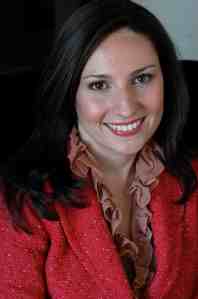
Dr. Whelan is a visiting assistant professor in the Sociology Department at the University of Pittsburgh. She earned a masters and doctorate from the University of Oxford and has held teaching positions at the University of Iowa, and Princeton University in the Sociology and Politics departments. She has been published in The Wall Street Journal, The Washington Post and The New York Post. She writes a bi-weekly relationship advice column for BustedHalo®, a young-adult website. She has appeared live on television programs and radio programs across the nation.
Dr. Whelan graduated magna cum laude from Princeton University, where she was Editor-in-Chief of the Daily Princetonian and was awarded the Daniel M. Sachs Scholarship to attend Worcester College at the University of Oxford.
Until recently, Dr. Whelan, 32, was among the SWANS.® In 2007, she and her husband, Peter, were married in New York City. Currently, they live and work in Pittsburgh with their dictator cats, Chairman Meow and Evita Purrron.
-
Recent
- Come Visit Me at http://www.christinewhelan.com/blog
- Las Vegas Quickie? No Problem…
- In the news
- Top Valentine’s Tips
- Can Love Make You Rich?
- Thowing Men Off the Scent
- MacFreedom: A Must-Have for Every Writer
- Are You A Little Bit Married?
- Thank Your Wives, You Lucky Bastards!
- 2010: The Year of The Happiness Project
- Single on New Year’s? You’re Not Alone
- Top 10 Feelings Worldwide: We Feel Fine
-
Links
-
Archives
- March 2010 (3)
- February 2010 (3)
- January 2010 (4)
- December 2009 (2)
- November 2009 (2)
- October 2009 (2)
- September 2009 (6)
- July 2009 (2)
- June 2009 (4)
- May 2009 (7)
- April 2009 (12)
- March 2009 (13)
-
Categories
-
RSS
Entries RSS
Comments RSS
 SWANS®SONG